A realistic silicone mask is not just a costume item. For film production, short videos, theater work and special effects projects, the mask needs to look believable under camera lighting, during close-up shots and throughout natural performer movement.
The difference between an inexpensive costume mask and a professional full head silicone mask becomes clear when the camera moves closer. Skin texture, eye openings, hairline, beard details, neck coverage and facial proportions all affect whether the character feels believable.
Film teams can explore FeiLang’s realistic silicone mask collection to compare different human, elderly and character designs.
1. Start With the Character Type
Before choosing a mask, define the role clearly. The design should match the character’s age, personality, facial structure and visual tone.
Consider whether you are creating:
- An elderly male character
- A mature professional character
- A bearded male character
- A bald character
- A female character
- A creature or special effects character
- A character based on custom reference images
A good movie prop mask should match the age, face shape and visual direction of the character. The sculpt, paintwork, hair and neck coverage should feel like parts of the same person.
Elderly Characters
An elderly silicone mask should include realistic wrinkles, aged skin texture, forehead lines, facial folds and natural sagging around the cheeks, jawline and neck.
Gray hair, white eyebrows and beard details can strengthen the age of the character, but these elements should blend naturally with the face.
Bearded Characters
A bearded male silicone mask should have believable beard density, direction and placement. The beard should match the shape of the jaw, mouth and side profile.
Poor beard placement can make an otherwise realistic mask look artificial, especially during close-up filming.
Female Characters
Female character masks may require softer facial proportions, detailed lips, refined eyebrows, natural eyelashes and a size designed for a smaller head shape.
Compare FeiLang’s men’s silicone masks and women’s silicone masks to review different character types.
2. Choose Full Head Coverage
For film production, a full head silicone mask is generally more convincing than a mask that only covers the front of the face.
Full head coverage helps improve:
- Side-angle shots
- Back-of-head visibility
- Neck transition
- Hairline realism
- Ear and temple coverage
- Costume continuity
- Head-turning sequences
If the camera will film the performer from multiple angles, choose a full head silicone mask instead of a partial face mask. This reduces visible edges and helps the character remain complete when the performer turns or moves.
The neck section is particularly important. A lower neck design can be placed beneath a shirt, jacket or costume collar, helping the wardrobe team hide the transition between the mask and the performer.
3. Check Skin Texture and Facial Details
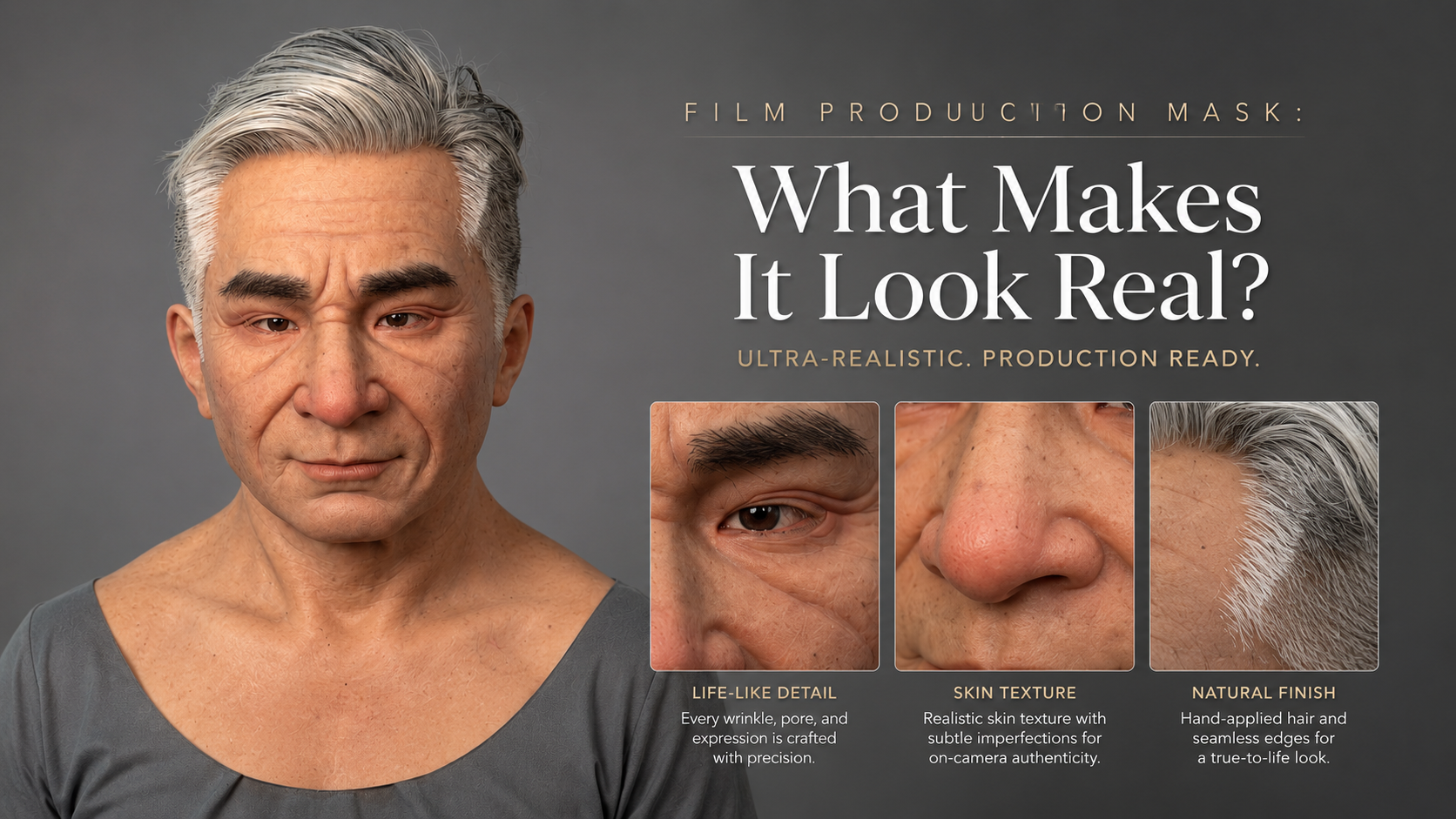
A hyper realistic silicone mask should not look flat. Detailed sculpting and layered paintwork help the surface respond naturally to camera lighting.
Look for visible details such as:
- Fine wrinkles
- Visible pores
- Skin tone variation
- Nasolabial folds
- Eye socket depth
- Forehead texture
- Cheek and jaw contours
- Natural lip texture
- Ear details
- Neck texture
- Beard or hair details
These details matter most during close-up shots. A mask may look acceptable from a distance, but a true film production mask should remain believable when the camera moves closer.
Review the Side Profile
Do not judge a mask only from the front. Ask to see the forehead, nose, lips, chin, cheekbones, ears and neck from the side.
A mask with a flat or weak profile may lose realism when the performer turns toward or away from the camera.
Review the Paint Finish
Human skin does not have one flat color. A realistic paint finish should include subtle differences around the cheeks, nose, eyes, lips, ears, scalp and neck.
Ask to see the mask under clear light because paint colors may appear different under natural light, warm studio lighting and cool LED lighting.
4. Pay Attention to Hair and Beard Work
Hair is one of the fastest ways to evaluate the finishing quality of a realistic silicone mask.
For silicone masks with hair or beard, check:
- Hair direction
- Hair density
- Hairline shape
- Beard placement
- Beard density
- Sideburn transition
- Eyebrow shape
- Gray or white hair blending
- Connection between the beard and jawline
If the mask has a beard, make sure it matches the facial structure. A well-finished beard can make a character look more natural, but incorrect placement can make the mask appear artificial.
For close-up scenes, ask for detailed views of the hairline, eyebrows, sideburns, beard and mustache under clear lighting.
5. Confirm the Size and Fit
A detailed mask still needs to fit the performer correctly. A loose mask may shift during filming, while a mask that is too tight may be uncomfortable or difficult to position.
Before ordering, confirm:
- Head circumference
- Neck circumference
- Mask size and fit range
- Eye opening position
- Mouth alignment
- Neck opening size
- Visibility requirements
- Expected wearing time
- Required performer movement
For sizing and wearing guidance, visit the FeiLang Mask FAQ .
6. Ask for Live Video Verification
Product photos are useful, but live video provides more confidence when purchasing a high-value silicone mask.
A WhatsApp video call allows the buyer to see the product in real time, request specific angles and ask questions directly.
Before purchasing, ask the seller to show:
- Front view
- Left and right side profiles
- Back of the head
- Skin texture close-up
- Hairline and eyebrows
- Hair or beard details
- Eye and mouth openings
- Inside structure
- Neck area and rear coverage
- Silicone flexibility
- The exact mask prepared for shipment, when available
- Packaging before shipping
At FeiLang Mask, customers can request WhatsApp live video verification before purchase or shipment. This allows buyers to check the actual mask rather than relying only on studio photos.
Check the Exact Mask Before Buying
Request a live WhatsApp video to inspect the skin texture, side profile, hair details, eye openings, neck coverage and inside structure.
Request a Live Video7. Match the Mask to the Scene
Different scenes require different mask features. Consider the camera distance, lighting, performer movement and expected wearing time before choosing a design.
Studio Film Production
For studio film work, choose a mask with detailed skin texture, strong side-profile sculpting, natural paint variation and full head coverage that remains convincing during close-up filming.
Stage Performance
For stage performances, a stronger facial structure and more visible character features may be useful because the audience views the performer from a greater distance.
Short Videos and Social Media
For short-form videos, choose a mask that remains realistic on mobile cameras and under practical indoor or outdoor lighting.
Special Effects Projects
For special effects work, choose a design with the required age, facial structure, hair, creature features or paint effects. The mask should support the visual direction of the scene.
Custom Character Projects
If an existing mask does not match the character, consider a custom project based on reference images, sizing requirements and production needs.
Learn more about FeiLang’s custom silicone mask service .
8. Test the Mask Before the Main Shoot
After the mask arrives, test it before the main production date. This gives the team time to identify possible fit, lighting or wardrobe issues.
During testing, check:
- How the mask fits the performer
- Eye and mouth alignment
- Appearance under the planned lighting
- Appearance through the selected camera and lens
- Movement during speaking and head turns
- Connection between the neck and wardrobe
- Performer comfort during the expected wearing time
Pre-production testing allows the team to adjust camera blocking, lighting, clothing and performer movement before filming begins.
Final Thoughts
A realistic silicone mask should support the story rather than distract from it. The best mask is one that matches the character, camera style and production requirements.
If you are choosing a movie prop mask or film production mask, do not judge by price alone. Check the material, full head coverage, facial sculpting, skin texture, hair work, fit and live video evidence.
Careful product review and testing help the production team choose a mask that remains believable during close-up filming, movement and different lighting conditions.
Need to Check a Mask Before Buying?
Contact FeiLang Mask and request live video verification of the exact silicone mask, including its skin texture, size, hair details and full head coverage.
Contact FeiLang on WhatsApp